Financial Learnings and Mistakes 2026
New survey from Aqua reveals the UK’s biggest financial learnings and mistakes for 2026


Financial Learnings and Mistakes 2026
As financial education becomes an increasingly important part of the conversation in the UK, from the classroom to conversations at home, how confident are we really when it comes to managing our money?
While schools are placing greater emphasis on equipping young people with the knowledge and skills they need to navigate their financial futures [1], many adults are still learning through experience, and sometimes, through mistakes.
Against this backdrop, our 2026 update to the Financial Learnings and Mistakes 2025 report revisits the state of financial confidence across the UK, exploring how attitudes have shifted over the past year through a nationally representative survey of 2,000 British adults aged 18+. The findings reveal a cautiously positive picture, with 36.3% of Brits saying they feel more confident about their finances than they did this time last year, compared with 26% who feel less confident.
But confidence is only part of the story. The campaign explores the financial mistakes people have made, the lessons they’ve taken from them and the resolutions they’re making for the year ahead. It also looks at the growing role of AI in money management, alongside the rise of side hustles and new ways to boost income.
How are Brits feeling about their finances in 2026?
Money isn’t just about counting the pennies, it can have a significant impact on how we feel day to day. In 2026, more than a third of Brits (36.3%) say they feel more confident about their finances than they did a year ago, suggesting a growing sense of optimism about their financial position.
Confidence is particularly strong among younger adults. Almost six in ten (59%) 18-24-year-olds say they feel more confident about their finances than they did a year ago, the highest proportion of any age group. At the other end of the scale, 45-54-year-olds are the least likely to feel more confident, at 34%, highlighting a notable generational difference in financial outlook.
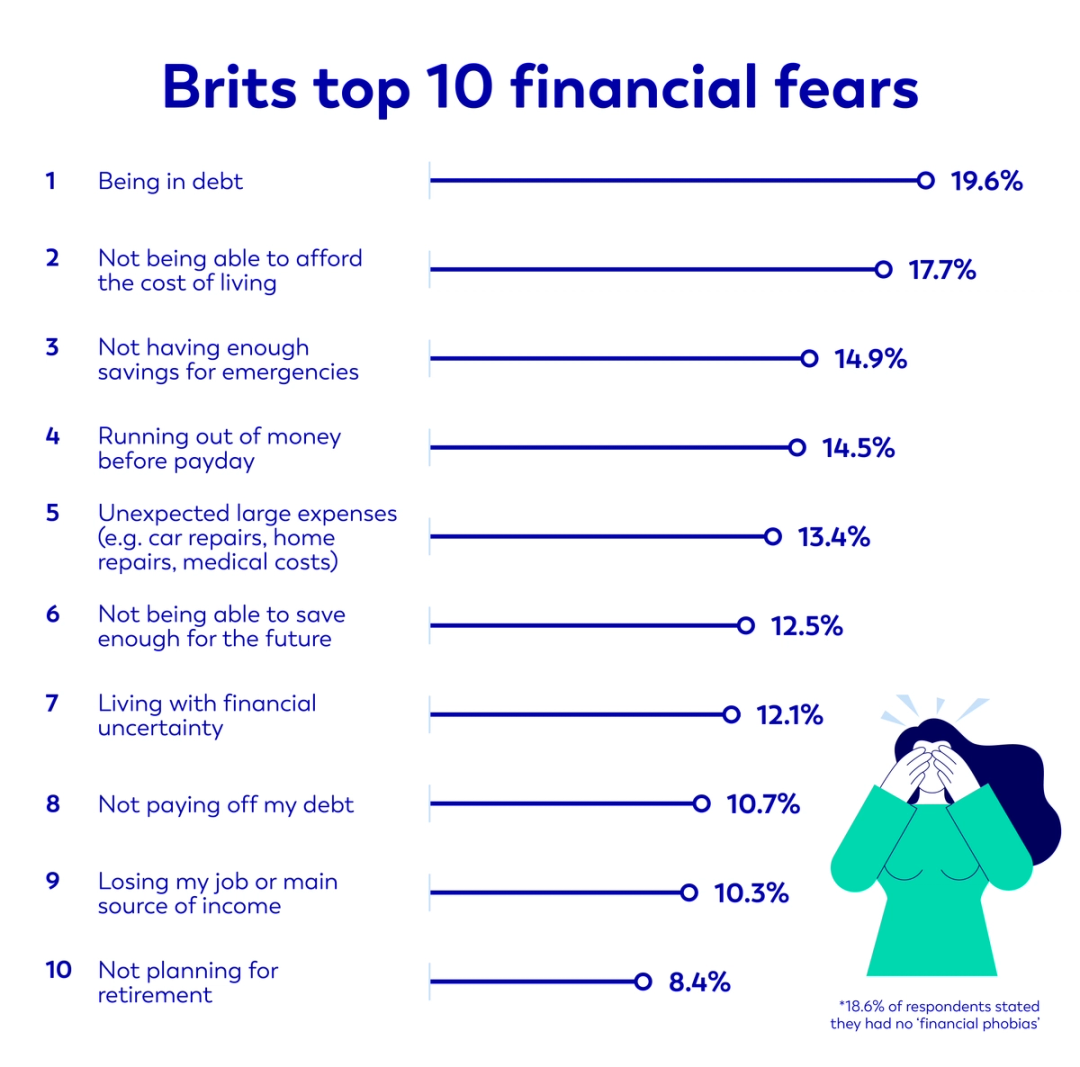
Despite the sense of growing confidence, financial worries remain in the picture. When asked about their biggest financial fears, being in debt ranks as the top concern, cited by 19.6% of Brits, followed by being unable to afford the cost of living (17.7%) and not having enough emergency savings (14.9%).
Brits top 10 financial fears:
The financial mistakes Brits regret the most
Financial decisions can have a significant impact on people’s financial resilience and wellbeing. From impulse purchases, to not having sufficient funds set aside for unexpected costs, the findings highlight some of the common financial behaviours that have affected Brits over the past year.
Impulse purchases are the most commonly reported financial mistake, with 21% of Brits admitting to making them in the past 12 months, followed by not having an emergency fund (19.2%) and spending beyond their means (18.8%). While some mistakes may seem relatively small at the time, the financial consequences can quickly add up.
On average, Brits who made these mistakes report losing £398 through impulsive purchases, while those who invested in crypto lost an average of £757. Meanwhile, those who didn’t use a balance transfer to help reduce their debt report losing an average of £483.
Overspending is also a common theme in everyday life for many Brits. Among those who said they had spent beyond their means, the most frequently cited areas of overspending were groceries (60%), eating out or ordering takeaways (58%) and online shopping (57.5%).
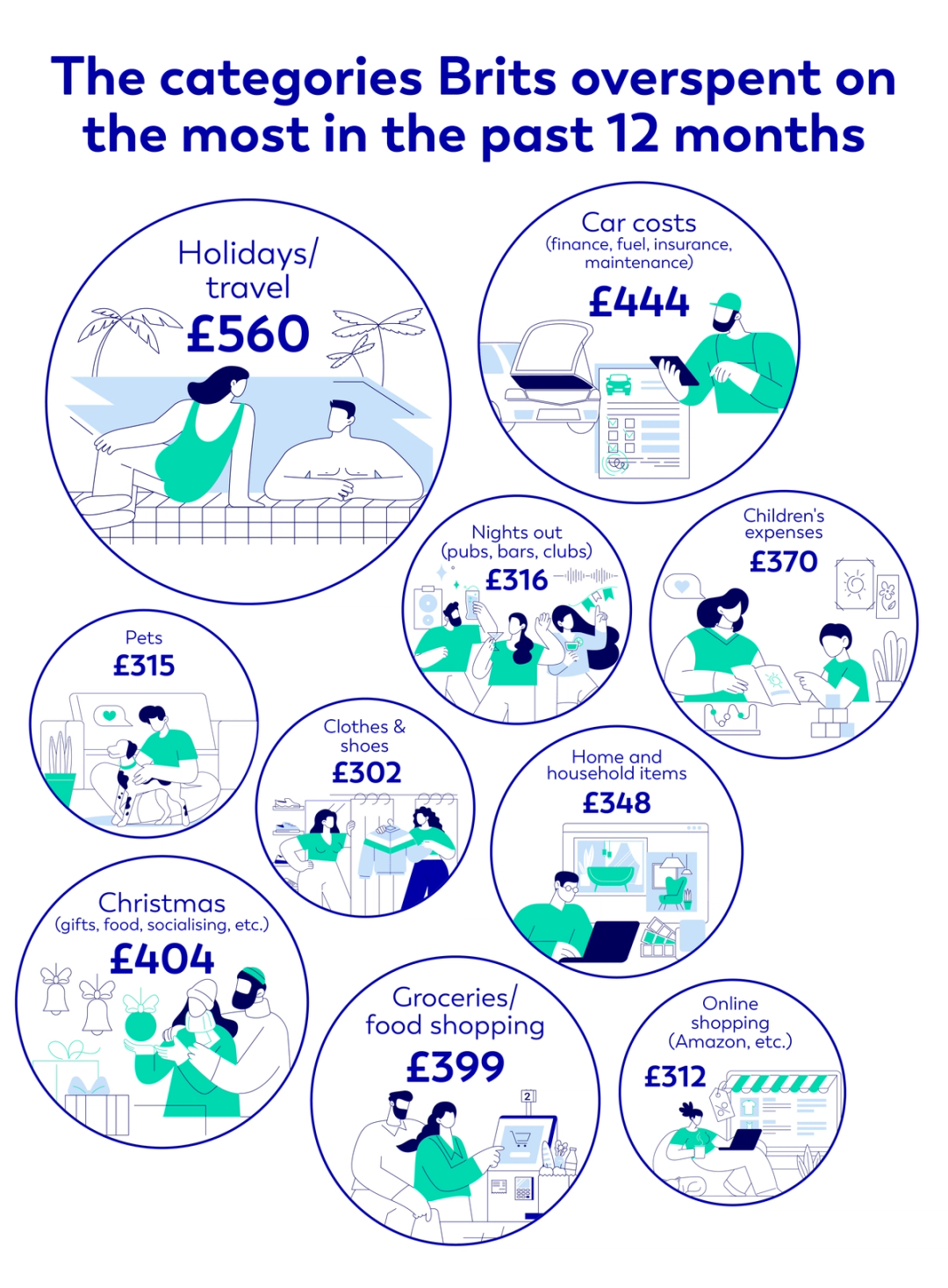
Looking at the spending categories that Brits report overspending the most on, over the past 12 months, holiday/travel ranks top, with an average over spend of £560. The impact of these decisions extends beyond the bank balance. Of those who admitted to spending beyond their means, 57.7% said it increased their stress, while 42.3% said it put them into debt. This highlights how financial mistakes can have a knock-on effect, influencing not only people’s financial position but their emotional wellbeing.
The categories Brits overspent the most on, over the past 12 months:
Brits’ top financial learnings from the past year
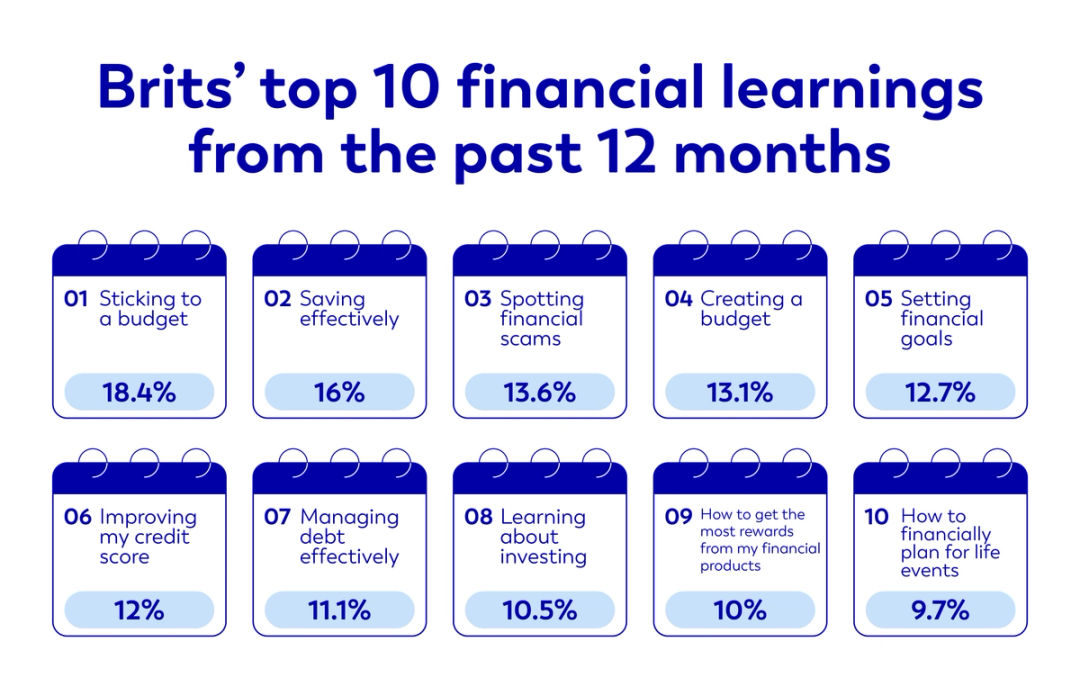
While financial mistakes can be costly, they can also be valuable learning experiences. Looking back, many Brits say there are some key things they have learnt over the past year, from learning how to stick to a budget to spotting financial scams. Over the past year, sticking to a budget has emerged as the biggest financial lesson Brits had learned, with 18.4% citing it as one of their biggest financial learnings. This is followed by how to save effectively (16%) and how to spot financial scams (13.6%), highlighting the importance of both managing money day to day, and protecting it from unexpected risks.
Data from CIFAS[2] highlights the scale of financial fraud in the UK, revealing that more than 444,000 cases of fraud were reported to the National Fraud Database (NFD) in 2025, the highest number recorded and a 6% increase on 2024.
Scott Yule, Commercial Strategy Director at Aqua, shares his advice on how consumers can spot fraud and avoid falling victim to scams:
“Financial scams are becoming increasingly sophisticated, making it harder to spot a malicious email, phone call, text message or letter at first glance. Take the time to read any communication carefully and look out for common signs of phishing. One simple check is to verify the sender’s email address or phone number, as reputable organisations will typically contact you using official domains and numbers. If you’re unsure, look up the organisation’s contact details independently and use these to confirm whether the communication is genuine.
It’s also important not to rush into taking action. If you receive an unexpected or urgent message, resist the pressure to respond immediately. Take a moment to assess the situation and, if necessary, contact the organisation directly using a trusted communication channel to verify that the message is legitimate.”
Brits top 10 financial learnings from the past 12 months
Financial learnings Brits wish they had known sooner
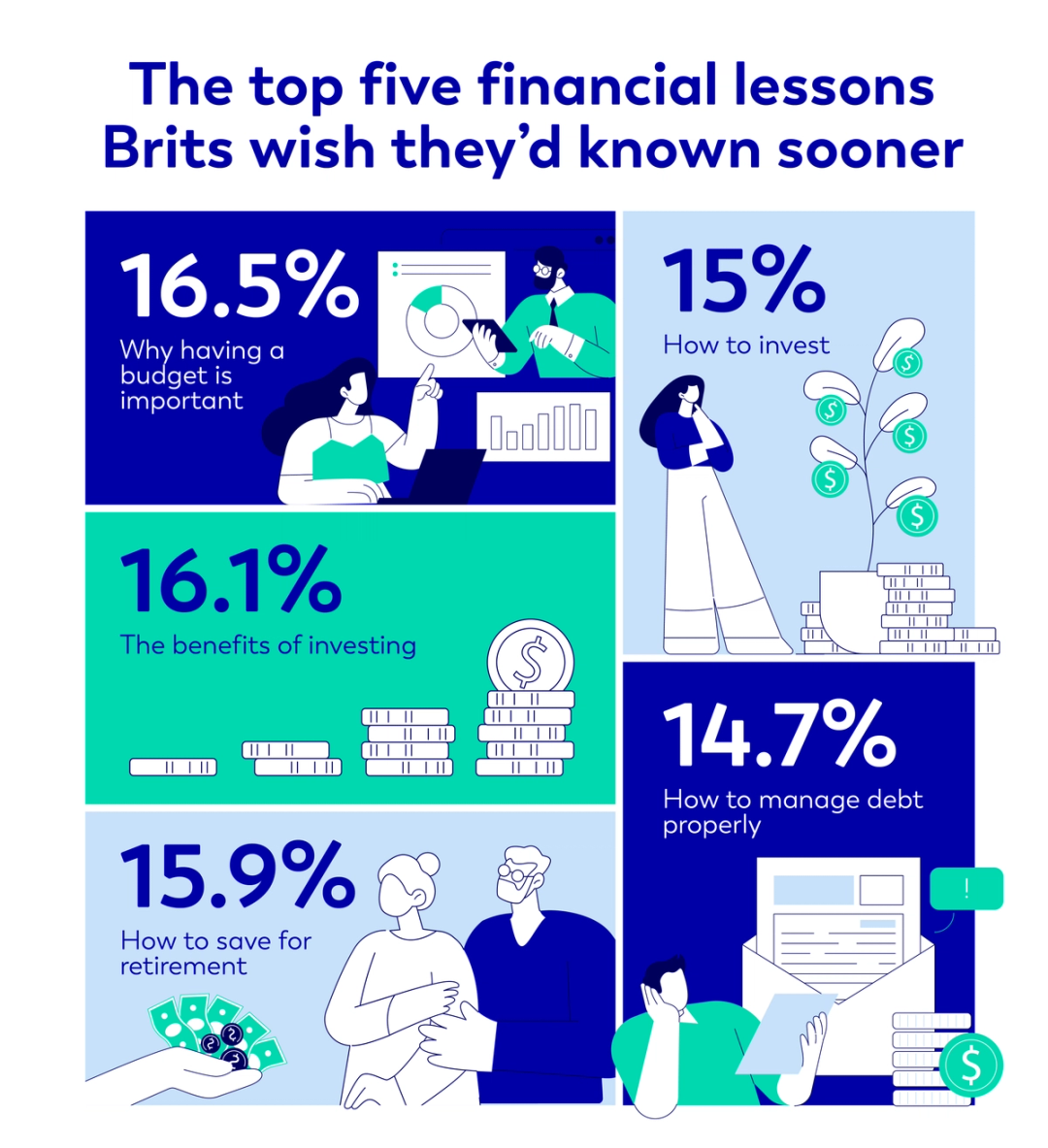
Looking at the financial topics Brits wish they had learnt sooner, the findings suggest that many Brits wish they had been given more practical financial education earlier in life. The most common response was understanding why having a budget is important, with 16.5% of respondents saying this is something they would have liked to have learned sooner.
This was closely followed by the benefits of investing (16.1%) and how to save for retirement (15.9%), highlighting a desire for greater understanding of both long-term saving and wealth-building.
Top five things Brits wish they had learnt sooner:
Where do Brits turn to for financial advice?
As people build their financial knowledge, our data shows that they’re turning to a mix of traditional and newer sources for advice. Friends and family are the most commonly used source of financial advice (34.5%), followed by financial institutions (24.4%), professional financial advisers (20.6%) and social media (17.8%)
But where people seek advice varies considerably by age. Social media is used as a source of financial advice by 40.6% of 18-24-year-olds, compared with just 5.1% of over-55s. This points to a clear generational difference in how Brits access financial information, with younger adults considerably more likely to use social platforms as part of their approach to learning about money.
The survey also found that almost a quarter (23.5%) of Brits do not seek financial advice, highlighting the importance of ensuring consumers have access to clear, reliable information to help them make informed financial decisions.
Scott Yule, Commercial Strategy Director at Aqua, comments on the importance of seeking financial guidance from trusted and reliable sources:
“Today, consumers have access to more financial information than ever before, but knowing where to find reliable and trustworthy guidance is increasingly important. The growing use of social media as a source of financial information reflects how the way we access and consume advice has changed.
Social media can make financial information more accessible, and there are qualified professionals who use these platforms to share useful guidance and insights. However, not all content is created by people with relevant financial expertise or qualifications, and information shared online may not always be accurate, appropriate or up to date.
Before acting on financial information found on social media or other online sources, it’s important to take a step back and check the source. Consider whether the person or organisation has the relevant expertise, and cross-check the information against reputable sources. Taking the time to do your own research can help you make more informed decisions about your finances.”
How are Brits using AI for financial advice?
AI is becoming an increasingly common source of financial information, with more than half (50.8%) of Brits saying they have used AI for financial advice. More than a third (35.2%) now use AI for financial advice every week, while 10.6% say they turn to it every day.
The trend is particularly pronounced among younger generations. Almost one in five (18.9%) Gen Z adults use AI for financial advice every day, rising to 60.4% who use it at least once a week. This highlights the growing role AI is playing in how younger consumers access and understand financial information.
However, the findings also highlight the potential risks of relying on AI for financial guidance. Among those who reported using AI for advice as a financial mistake, the average loss was £377 in the past 12 months, demonstrating that AI-generated information can have real financial consequences when acted upon without further checks.
As AI tools become more integrated into everyday money management, consumers should treat AI as a starting point for information rather than a substitute for professional financial advice. It's important to verify financial information against trusted sources, particularly before making decisions that could have significant financial consequences.
Scott Yule, Commercial Strategy Director at Aqua, comments:
“AI can be a useful tool for helping people understand financial topics, but it’s important to remember that not all information generated by AI will be accurate, current or appropriate to your individual circumstances.
Before acting on financial guidance from an AI tool, take the time to check the information against trusted sources and avoid sharing sensitive personal or financial information. AI can help people ask questions and build their understanding, but important financial decisions should be based on reliable information and, where appropriate, professional advice.”
How Brits are managing their money in 2026
As financial habits become increasingly digital, our data reveals that Brits are using a combination of technology and more traditional methods to keep track of their money. From mobile banking apps and spreadsheets to pen and paper, the findings show there is no single approach to managing day-to-day finances.
Mobile banking apps are the most popular tool, with 46.2% of Brits using them to manage their finances. Traditional methods remain common too, with more than one in five (20.8%) using pen and paper, while 14% use a spreadsheet. A further 8.2% use a dedicated budgeting app, suggesting that while digital tools are widely used, many people still prefer simple or familiar ways of keeping track of their money.
However, not everyone actively monitors their finances. One in eight Brits (11.8%) say they do not actively track or manage their finances at all. With regular monitoring helping people understand where their money is going and identify potential issues early, keeping an eye on income, spending and regular commitments can be an important part of building healthier financial habits.
Scott Yule, Commercial Strategy Director at Aqua, comments on the importance of regularly checking and tracking your finances:
“Keeping track of your finances doesn’t have to mean using complicated spreadsheets or detailed budgeting tools. For many people, simply checking their bank account regularly and understanding what’s coming in and going out can provide a clearer picture of their financial position.
Regularly reviewing your spending can also help you spot changes or unexpected costs early, whether that’s a subscription you no longer use, an increase in a regular bill or spending that has gradually crept up over time. The most important thing is finding a method that works for you and making it part of your regular routine.”
One in five Brits don’t know their credit score
Alongside managing day-to-day spending, understanding your credit profile can also play an important role in financial planning. However, the findings suggest that a significant proportion of Brits are still unsure of where they stand, with one in five (20.4%) saying they do not know their current credit score.
Your credit score can be used by lenders alongside other information when assessing applications for credit, so understanding your credit report and keeping the information on it accurate can help you have a clearer picture of your financial position. Checking your credit report regularly can also help you identify incorrect information or unfamiliar activity.
Scott Yule, Commercial Strategy Director at Aqua, comments on the importance of understanding your credit score:
“Your credit score is one part of the wider picture lenders may consider when you apply for credit, so it can be useful to understand what information is held about you. Checking your credit report regularly can also help you identify anything that doesn’t look right and raise an issue if you spot an error.
There’s no need to wait until you’re applying for credit to check your report. Making it part of your regular financial routine can help you stay informed about your credit history and give you the opportunity to address any inaccuracies you find.”
Side hustles are becoming an increasingly important source of income
For some Brits, managing household finances isn’t only about controlling spending. Increasing income is also becoming part of the picture, with side hustles providing an additional source of earnings for many people.
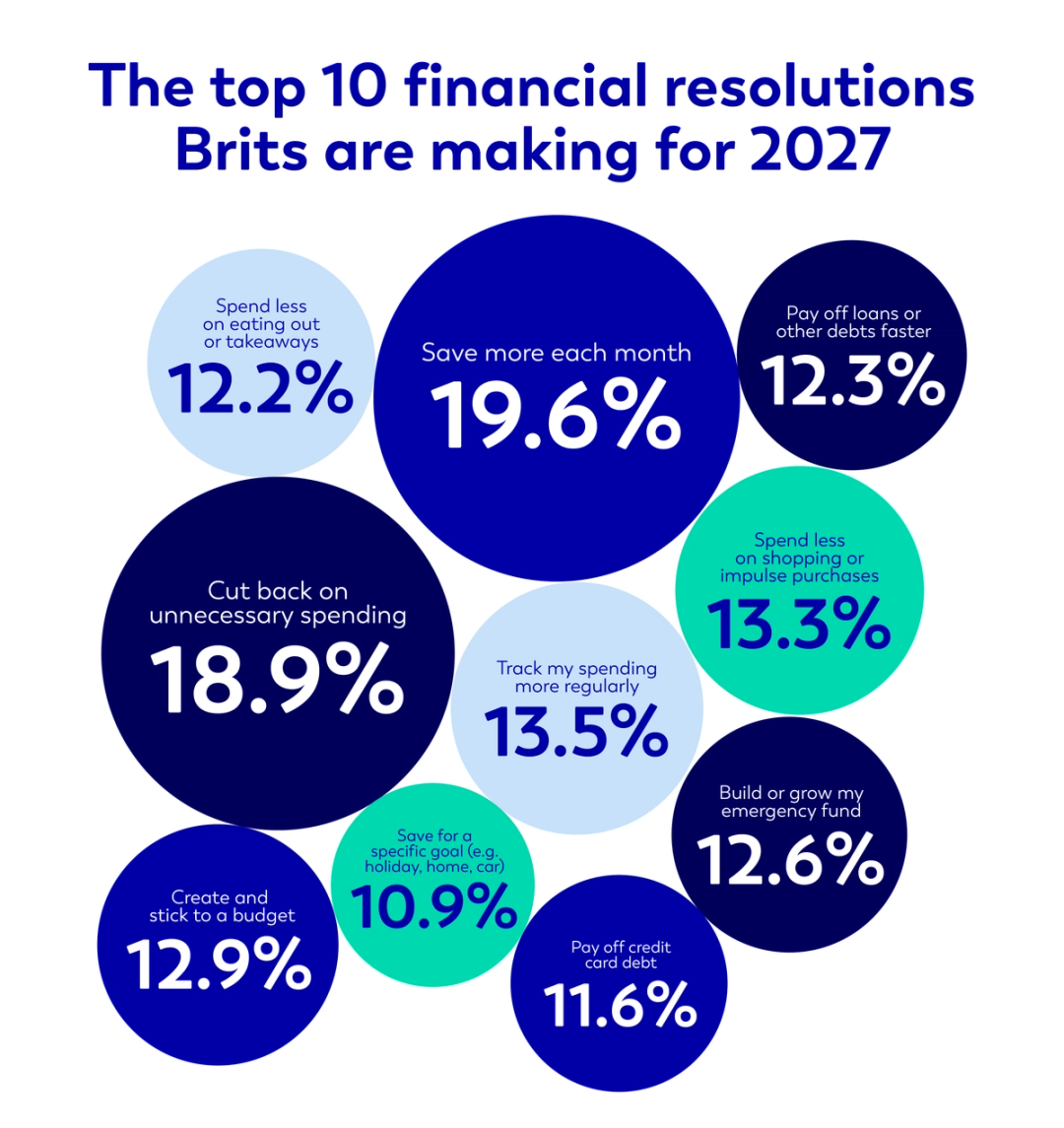
More than a quarter of Brits (28.3%) say they started a side hustle in the past 12 months, highlighting the growing role of additional income streams in people's financial lives. Among those who started a side hustle in the past 12 months, the reported mean monthly income is £126.
Selling items online is the most common named side hustle, cited by 25.4% of those who have started one in the past 12 months. This could include anything from selling unwanted belongings to running a small online business, offering a relatively accessible way to generate additional income.
For many, the motivation is closely linked to everyday household finances. Covering everyday living costs and increasing income is the leading reason for starting a side hustle, cited by 29.9% of respondents who started one. This suggests that, alongside saving and cutting back on spending, some Brits are looking for ways to increase their income to help manage the cost of everyday life.
The most popular side hustles started in the past 12 months
New Year financial resolutions: expectation vs reality
For many Brits, the start of a new year is a chance to reset their finances. But while setting a financial goal can be relatively straightforward, sticking to it over the course of the year can be more challenging.
According to our survey three in 10 Brits (30%) set a financial resolution for 2026. Among those who made a resolution, 20% say they have stuck to all of them so far and 45% have stuck to most of them. Meanwhile, 23% say they have stuck to some of their resolutions and 12% have stuck to none of them.
This suggests that, for the majority of people who set financial goals, resolutions don’t simply disappear once January is over. However, the fact that one in five have managed to stick to all their goals highlights the challenge of turning financial intentions into longer-term habits.
The top financial goal set for 2026 was to save more each month, cited by 23% of respondents. Cutting back on unnecessary spending was the second most popular goal (22%) and spending less on takeaways and eating out, third (20%).
Savings and cutting back on spending are top priorities for 2027
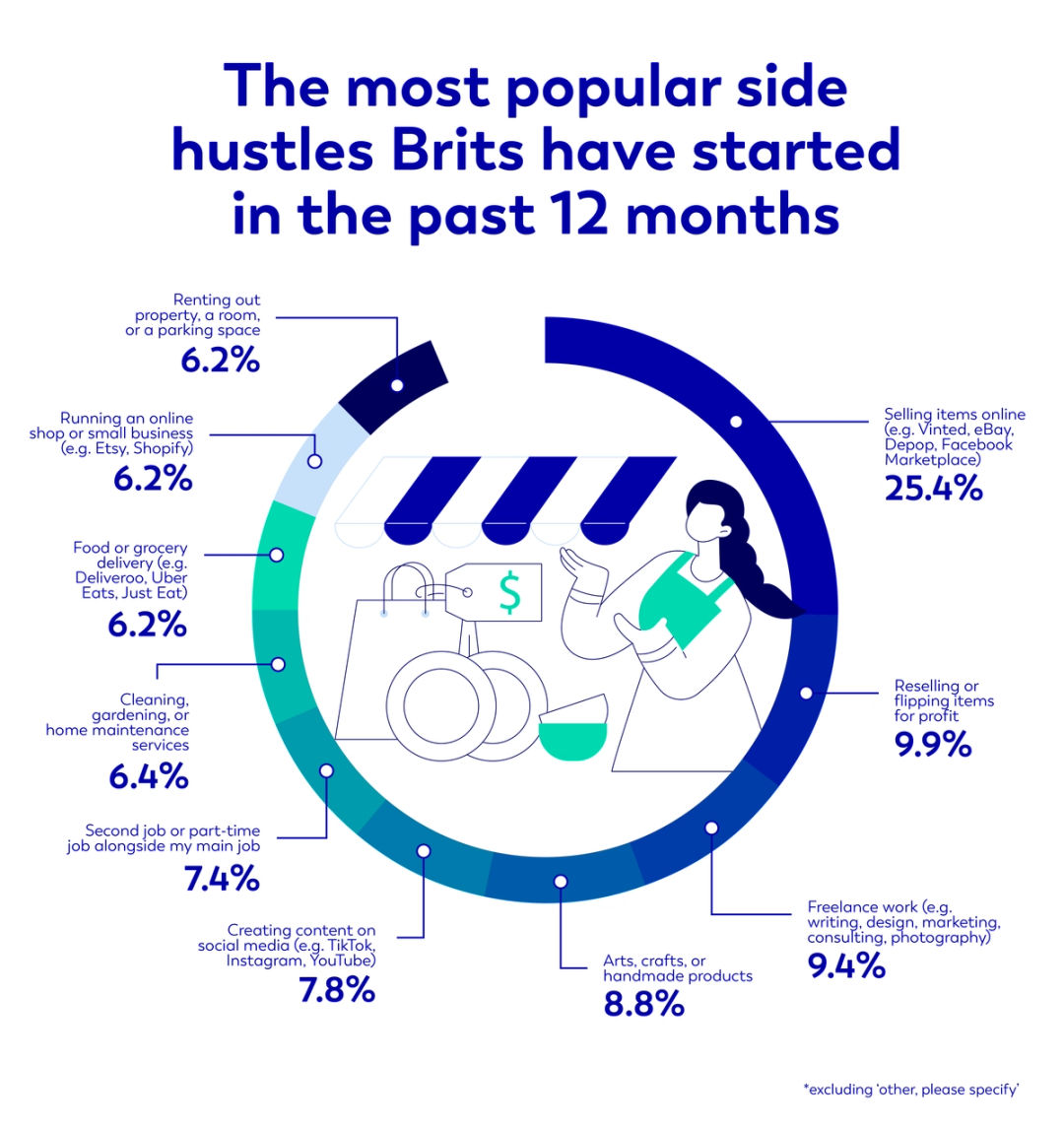
Looking ahead to 2027, Brits are once again focused on making practical changes to the way they manage their money. Saving more each month is the most popular financial resolution, with 19.6% of Brits planning to make it a goal, closely followed by cutting back on unnecessary spending (18.9%),
Other planned resolutions include tracking spending more regularly (13.5%) and spending less on shopping or impulse purchases (13.3%).
However, not everyone plans to make a financial resolution, with more than a quarter of Brits (28.2%) saying they won’t set one for 2027. While New Year’s resolutions may not work for everyone, setting realistic financial goals and reviewing progress regularly could provide a more sustainable way to build positive money habits throughout the year.
The top 10 most common financial resolution Brits are setting in 2027:
Scott Yule, Commercial Strategy Director at Aqua, comments on the findings of the 2026 Financial Learnings and Mistakes report:
“Our research shows that while financial confidence is growing, there’s still a gap between good intentions and everyday habits. Simple steps, such as regularly checking your spending, understanding your credit position and setting realistic savings goals, can help people feel more in control of their finances.
It’s encouraging to see saving more and cutting back on unnecessary spending among the top financial priorities for 2027. The key is turning these intentions into manageable, sustainable habits rather than trying to make major changes all at once.
The findings also show how the way we manage and earn money is changing, from greater use of digital banking to the growing popularity of side hustles. With more people also turning to social media and AI for financial information, it’s increasingly important to check sources carefully and make sure guidance is accurate and appropriate to your circumstances.
Ultimately, building financial confidence is about taking small, informed steps and learning from experience along the way.”
Methodology and Sources:
Nationally representative survey of 2,000 UK adults aged 18+ conducted in September 2026 with Censuswide.
[1] IPTF sets its sights on schools with new financial education initiative - FTAdviser
[2] Fraudscape 2026: Fraud cases hit record highs as criminals adapt and scale | Cifas
Contributors


You might also like
Slide 1 of 3
Financial Learnings and Mistakes 2025
New survey from Aqua reveals the UK’s biggest financial learnings and mistakes


Financial Learnings and Mistakes 2024
Aqua’s latest survey explores Brits’ biggest financial learnings and mistakes.


At what age can you get a credit card?
Discover the minimum age to get a credit card in the UK, what you need to apply, and tips for young adults starting...
The smart way to build better credit
Aqua is the credit card that gives you the power to improve your credit score